Industrial Operator by Cleverdist
Product
  • Protect Dispatch Window
  • Recover Line Speed
  • Catch Transfer Losses
  • Keep Cranes Moving
  • Prevent HVAC Recovery
  • Clear Weak Assets
PricingQ&AAbout
info@cleverdist.com

Industrial Operator

Autonomous AI for industrial operations.

Supervised or Autonomous
On top of existing systems
Built-in governance

IO in the real world

References

Supporting multi-plant combined-cycle operations with IO
Naturgy logo

Naturgy + IO

Supporting multi-plant combined-cycle operations with IO

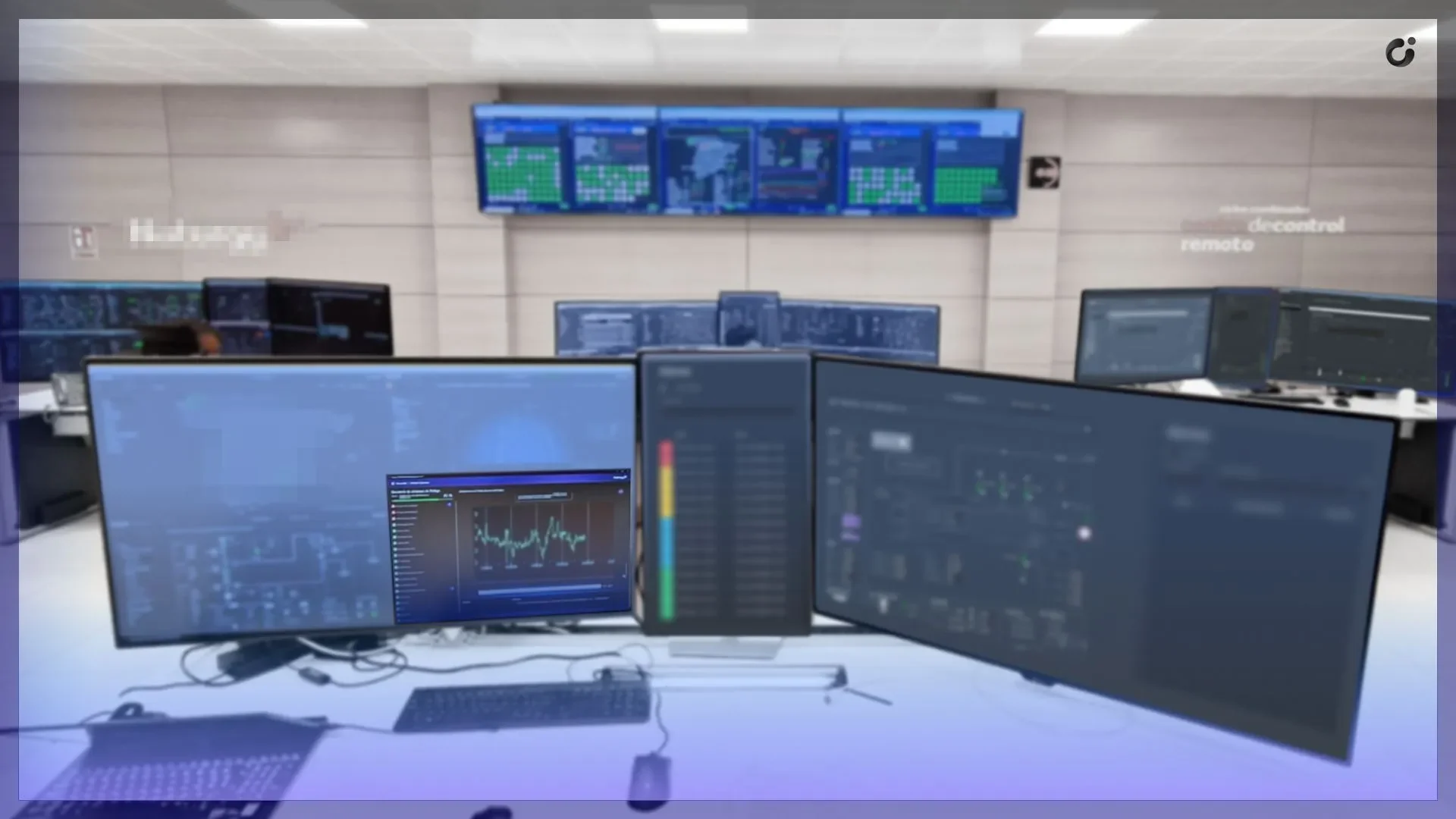
Centralized operations across combined-cycle power plants, with IO reasoning above existing plant systems.

11combined-cycle sites
17gas turbine units
10-25%hidden capacity identified
+5-15%throughput gain potential
€1.3Min avoided investment
€700k-€1Mannual value potential
10M+I/O parameters
50+More than 50-country collaboration
AllMultilingual shifter support
70%up to 70% fewer expert escalations

Deployed in real industrial environments — not demos. Built on 10+ years of mission-critical automation expertise.

Swiss-tech
Industrial-grade engineering
Vendor-agnostic

Differentiation

We model thinking,
not tasks.

Others chain AI agents in workflows. IO captures how your experts actually reason. That's why it scales where others don't.

Others: Linear Workflow
IO: Industrial Reasoning
STEP 01STEP 02STEP 03
Read our technical approach (PDF)

Governance & Accountability

Your pace. Your policies.

Governance that scales with confidence. Some teams need human-in-the-loop today. Others are ready for delegated execution. IO supports both, with explicit policies, full audit trails, and the flexibility to evolve at your pace.
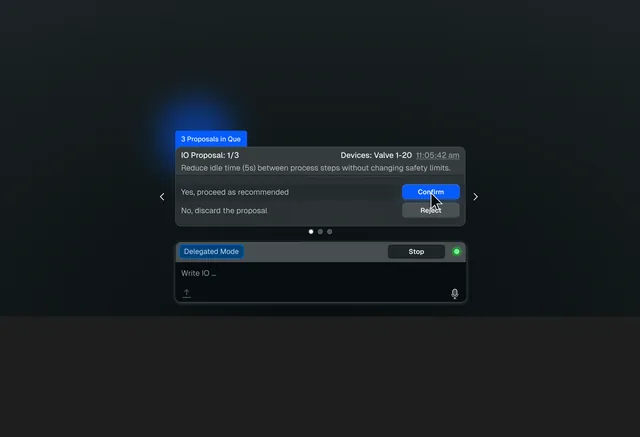
IO proposal queue — human confirms or rejects each recommendation before execution

Human in the loop

AI thinks. You decide.

Full visibility at all times. IO surfaces recommendations — every action requires a human to approve before anything happens.
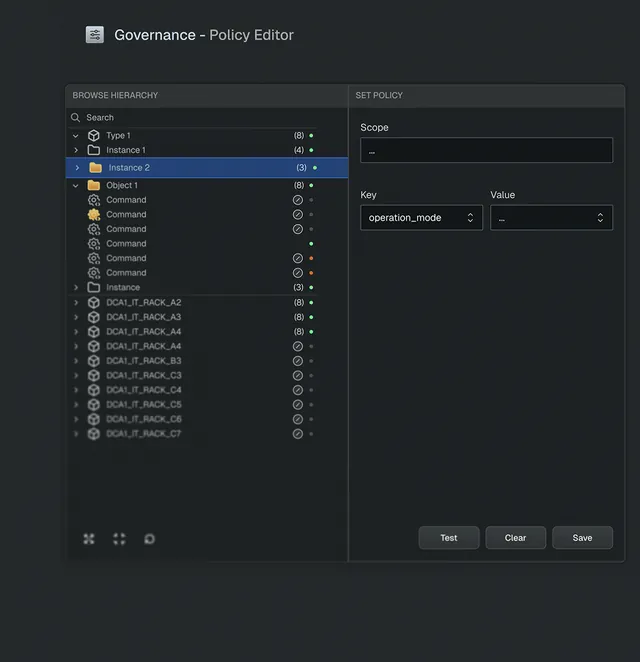
Governance policy editor — browse hierarchy and set scoped policies for delegated execution

Delegated Execution

AI acts within your rules.

Delegation is explicit, scoped, and reversible. You define what IO may or may not do — and responsibility always remains human-owned.

  • AI cannot decide or act
  • Every action remains human-validated
  • Full audit trail for regulators
  • Delegation is explicit, scoped, reversible
  • Your rules define what AI may or may not do
  • Responsibility remains human-owned

Architecture

The journey with us is simple.

We model your landscape.

Messy is fine. Our onboarding tools create the context (ontology) AI needs. We work directly with you or with your trusted integrators.

Seamless integration across your ecosystem

SCADA / DCS
Historians
MES
ERP
EAM / CMMS
APM
Quality / LIMS
Planning / APS
Documents
APIs

Examples include

SiemensWinCC OAIgnitionAVEVAABB 800xADeltaVHoneywell ExperionYokogawa CENTUM VPFactoryTalkGE ProficyPI SystemSAPIBM MaximoServiceNow...and more
Download IO Secure Architecture (PDF)

Ready?

Start your pilot.

One mission. Clear success metric. Governed rollout.

Book an intro
IOby Cleverdist

Autonomous AI that operates within your governance, at any scale.

info@cleverdist.comLinkedIn

Product

Company

AboutQ&AContact

Legal

© 2026 Cleverdist SA · Geneva, Switzerland

Use Alt with the left or right arrow keys to move to the previous or next use case in the carousel.

IO Use Cases

Energy

Protect Dispatch Window

Manufacturing

Recover Line Speed

Logistics

Catch Transfer LossesKeep Cranes Moving

Mobility

Prevent HVAC RecoveryClear Weak Assets

Logistics · Container Terminals

Keep quay cranes moving before yard and gate constraints steal berth time

IO follows the active vessel execution plan, compares crane, yard, transport, gate and container-readiness signals, and guides terminal teams before one missed dependency turns available berth capacity into waiting time.

Relevant for container terminals where vessel operations depend on tight coordination between quay cranes, yard cranes, terminal tractors, gates, container status and berth priorities.

15-30 minrecovery window before productivity drops
5-12%target quay-crane productivity improvement
10-25%reduction in truck or yard waiting time
EUR 500k-3Millustrative annual value per terminal

SEO slug: industrial-ai-agents-logistics-container-terminals-quay-crane-productivity

Use-case summary: Protect quay-crane productivity during live vessel execution by detecting yard, transport, gate and container-readiness dependencies before berth time is lost.

Use case context

The problem is not lack of capacity. It is losing the recovery window while the bottleneck moves.

Container terminals operate around live vessel plans where quay cranes, yard blocks, terminal tractors, gate flows and container readiness must stay aligned.

A vessel operation can still look recoverable while the next constraint is already forming somewhere else: a yard block is congested, a yard crane queue is growing, a tractor pool is misaligned, a container is not ready, or a gate flow is about to overload the receiving area.

By the time quay-crane productivity drops, the cause may already have moved across the operation. Teams then recover late, with more waiting time, more rehandles and more pressure on berth windows.

The real IO mission is to follow the active execution plan, detect which dependency is about to break the chain, and identify the next coordination action before berth time is lost.

IO models the reasoning of berth planners, yard supervisors and terminal operations teams: what they compare, which constraints they trust, which recovery actions are safe, and when they escalate before a small mismatch becomes a vessel-delay problem.

Concrete trigger

A vessel operation is still running, but crane move rate, yard crane queues, tractor availability, container readiness, gate appointments and yard block status no longer support the planned sequence. IO flags the coming constraint and proposes the next recovery action before the quay crane becomes starved or blocked.

Pain points

What the terminal loses when the bottleneck is detected too late

The cost is not only crane idle time. Late coordination creates vessel delays, truck queues, yard congestion, unnecessary rehandles and pressure on the next berth window.

Quay-crane idle time

  • Cranes wait because the next container, tractor, yard move or document status is not ready.
  • Productivity drops even when the crane itself is available.
  • Lost berth time is difficult to recover later in the vessel call.

Yard and transport congestion

  • Yard cranes, terminal tractors or straddle carriers queue around the wrong priorities.
  • Blocks become congested while other capacity remains underused.
  • Small local delays propagate into vessel and gate operations.

Truck and gate waiting

  • Truck call-offs and gate appointments do not match actual yard readiness.
  • External trucks wait while containers or receiving blocks are not ready.
  • Gate flow creates pressure in the wrong area at the wrong time.

Repeated recovery work

  • Supervisors manually repair the plan under pressure.
  • The same vessel, yard, equipment or gate patterns repeat.
  • Root causes remain unclear: yard layout, equipment allocation, container status, gate flow or planning assumption.

How IO reasons

IO models the terminal expert who sees which dependency will steal crane productivity next

This mission is not a generic port optimization dashboard. IO evaluates the live vessel execution plan, identifies the next moving bottleneck, and recommends the useful recovery action before the operation loses capacity.

Builds the expected execution story

Compares vessel plan, crane sequence, planned moves, yard block status, container location, equipment allocation, gate appointments and documentation state.

Detects dependency drift

Looks for early mismatch between crane demand, yard readiness, equipment availability, transport flow and container status.

Evaluates constraint hypotheses

Treats yard congestion, tractor shortage, crane imbalance, container hold, gate pressure, equipment delay and documentation issue as hypotheses to test.

Recommends the next coordination lever

Suggests resequencing, pre-staging, yard-crane reprioritisation, tractor dispatch, gate call-off adjustment, slot reservation, hold status or escalation.

IO governance

The user decides how much authority IO has

IO can start as a supervised coordination advisor, then execute approved TOS, yard, gate or dispatch actions only when terminal policies allow it.

Supervised mode: IO proposes, terminal operations confirm

  • IO spots a vessel, crane, yard or gate dependency likely to break the execution plan.
  • IO shows which constraint is forming and how it will affect crane productivity, berth time or truck waiting.
  • Berth, yard or gate teams confirm local constraints, priorities and contractual limitations.
  • The team resequences, pre-stages, dispatches, holds, escalates or updates the plan with a clear reason.

This is the natural starting point when vessel priorities, contracts, safety rules and terminal commitments must be balanced carefully.

Delegated mode: IO executes approved coordination actions before the plan loses capacity

  • Mark a vessel sequence, yard block, gate flow or equipment dependency as at risk.
  • Create pre-staging tasks for containers needed soon by the active crane sequence.
  • Reprioritise yard-crane or tractor tasks linked to the active vessel within approved rules.
  • Reserve a yard slot, transfer lane or staging area needed to protect crane productivity.
Execution-gating levers
  • Hold a gate release when the receiving yard block is not ready.
  • Block ready-for-crane or ready-for-dispatch status when the container path is not actually ready.
  • Trigger a revised truck call-off window when gate flow would create downstream congestion.
  • Open a delay-recovery procedure with affected assets, timestamps, likely constraint and recommended action.
  • Keep higher-risk crane and terminal-control actions supervised unless explicitly authorised by terminal policy and existing protections.

Expected benefits

More berth productivity with fewer late recovery actions

Expected value depends on vessel volume, berth pressure, current crane productivity, yard congestion, gate variability, available signals and how much execution authority IO is allowed to exercise.

Higher quay-crane productivity

Reduce avoidable crane starvation, blocking and idle time during active vessel operations.

Lower truck and yard waiting

Align gate flow, yard readiness and equipment dispatch before queues build up.

Fewer rehandles and recovery moves

Detect plan drift earlier and reduce corrective moves caused by late constraint discovery.

Better operational visibility

Show why productivity drops repeatedly: yard block pressure, equipment allocation, container readiness, gate flow, documentation status or planning assumptions.

Discuss this case

Could one missed dependency steal berth time before your team sees the bottleneck?

The first step is to frame the mission: which vessel operations matter, which live signals are available, which constraints experts already monitor, and which coordination actions should remain supervised or become delegated under policy.

  • Which vessel calls, cranes, yard blocks or gate flows create the highest delay pressure?
  • Which TOS, crane, yard, tractor, gate, OCR, RFID, weighbridge and equipment-status signals are already available?
  • Where does quay-crane productivity repeatedly drop despite available assets?
  • Which expert checks determine whether the cause is yard congestion, equipment allocation, gate flow, container readiness or documentation status?
  • Which actions can IO recommend, prepare or trigger under approved terminal procedures?
  • Which crane-productivity, truck-waiting, rehandle or berth-delay target would justify the first mission?

Want to map this to your vessel execution plan, yard signals and terminal procedures?

info@cleverdist.comLinkedIn